Quality Assurance (QA) in the Doctoral Programmes of the University of Padua is implemented in accordance with the ANVUR AVA 3 framework and the requirements of Ministerial Decree 226/2021, which mandates accredited institutions to adopt a structured system for the design, management, monitoring, and continuous improvement of doctoral training (see image below). The primary goal is to ensure a high-quality educational and research environment that supports the development of the doctoral candidates’ scientific, professional, and transversal skills, in line with the European Standards and Guidelines for Quality Assurance in the European Higher Education Area (ESG). Within this framework, each Doctoral Programme adopts transparent procedures for defining learning objectives and expected outcomes, plans and organizes appropriate educational and research activities consistent with its mission, monitors progress and results, and implements evidence-based improvements. Active engagement of doctoral candidates, academic staff, and the Doctoral Board is a key component of the QA cycle, together with ongoing interaction with the University Quality Assurance Office, the Internal Evaluation Group and the relevant institutional bodies. Therefore, QA in the doctoral domain ensures rigorous and internationally recognisable training paths that fully respond to the needs of advanced research and society, supporting the continuous enhancement of the learning experience and the quality of the scientific outcomes produced.
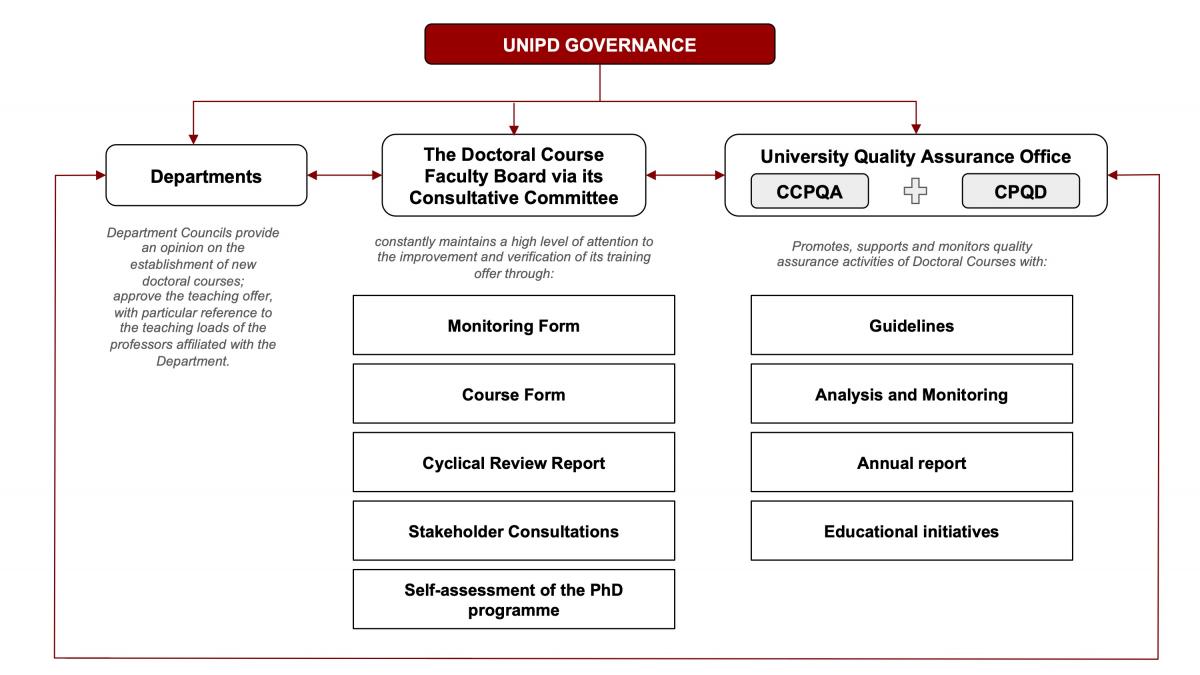
At the course level, quality assurance gravitated around the Consultative Committee, which has the role of assisting the Coordinator in his/her monitoring activities (analysis of the training and research path, including research periods abroad, participation in conferences, quality and quantity of scientific production) and listening to PhD students (through opinion survey questionnaires, possibly supplemented by other tools). The Consultative Committee, chaired by the Coordinator of the PhD Programme or his/her delegate, has the following minimum composition: three professors who are part of the Faculty Board, a representative of the PhD students and a stakeholder. The Consultative Committee can have an international composition so that its indications have a broader and more varied scope. The Consultative Committee plays a role of advice and guidance regarding the training project of the doctoral course and the identification of employment opportunities. This committee carries out, among the other activities, annual evaluations and planning, eventually discussed and approved by the Faculty Board.
In our doctoral program, the BMCS Consultative Committee is chaired by the Coordinator, relies on an Advisory Committee of International Stakeholders, and includes the Deputy Coordinator, the Faculty Members in charge of the Research Committee (which monitors the project’s progress), of the Teaching Committee (which monitors the fulfillment of the learning obligations, the visit plan for the period abroad, and other credited activities), representatives of both curricula, a representative from FBK and PhD students representatives. Its Advisory Board of Stakeholders is also listed in the Governance page and includes experts from the Academia, Industry, in both areas addressed by the doctoral program.
- The composition of the current BMCS Consultative Committee and Advisory Board are described in the BMCS Governance page on this website.
- The meeeting minutes of the Consultative Committee and the annual evaluation reports are all stored in this Moodle page, accessible to the Committee members.
OTHER LINKS
- Quality Assurance Page of the Department of General Psychology, where BMCS's administration is currently based
- Quality Assurance System of the University of Padova
|
Human Inspired Technology Research Centre Via Luzzatti, 4 - 35121 Padova Phone: +39 049 827 5796 |
Administration office direzione.hit@unipd.it P.I. 00742430283 C.F. 80006480281 |



|


